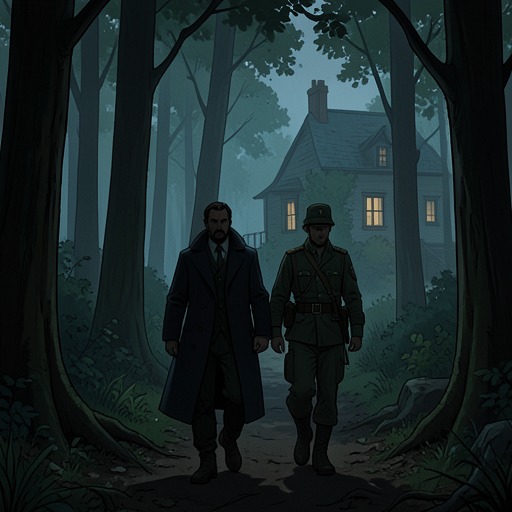
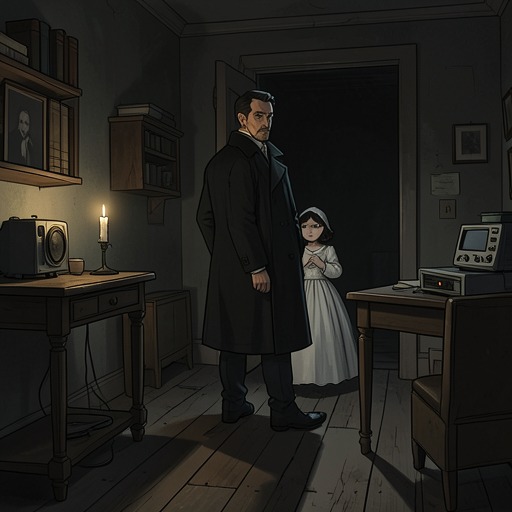
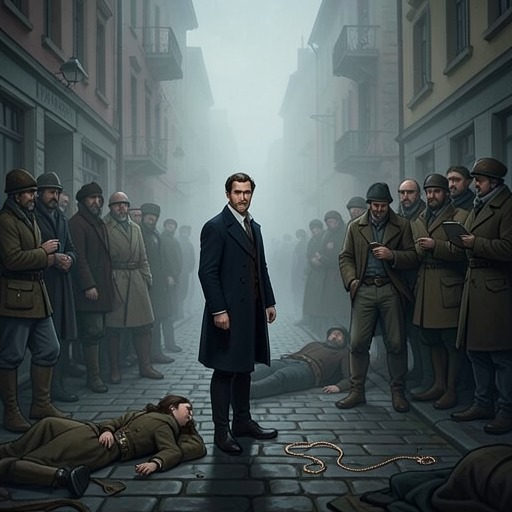
Dominic Cavendish and Sir Hubert Williams
When You Were MineDominic Cavendish and Sir Hubert Williams are linked by the search for Isobel Davenport after she is believed dead: Sir Hubert is the magistrate who handled the unidentified woman’s burial, while Dominic arrives determined to learn how she died and whether the official account can be trusted. Their brief graveyard encounter turns the magistrate from a source of answers into a possible keeper of concealed truth. Suspicion, rather than established personal allegiance, defines their relationship.
The search leads to the magistrate
After events in Norfolk were concluded, Dominic Cavendish and Peter Davenport returned to Willowbrook Hall and learned that Isobel Davenport had been taken away by Rupert Davenport. Elspeth reported a hurried, tearful farewell and said Rupert had used threats to overcome her objections. Kitty later disclosed that Isobel had escaped Gosport Hall, but Dominic and Peter did not yet know she was alive. Their search northward instead brought them to reports of an unidentified young woman found dead near Peterborough.
The woman had been buried in a village pauper’s grave, marked only by a plain wooden cross. She had no identification, and the local magistrate had ordered the funeral without knowing who she was. The grave’s distance from Isobel’s family crypt sharpened the brothers’ distress: if the body was Isobel’s, she had been buried far from her family, without the recognition or rites Peter believed she deserved. Dominic approached the inquiry not as a settled matter but as a question demanding answers.
A first meeting shaped by grief
Sir Hubert Williams arrived by curricle in the village graveyard and introduced himself as the magistrate. Peter spoke stiffly, while Dominic acknowledged him with a brusque nod. The contrast between Sir Hubert’s formal entrance and the brothers’ barely restrained grief establishes the imbalance of the meeting: he has the authority to explain what was done, but they have come prepared to challenge any account that does not withstand scrutiny.
Peter identified the dead woman as his sister and asked about the sole object found on her. Sir Hubert produced a thin gold chain bearing the star-shaped necklace that Dominic and Peter recognized. Their certainty came from the object’s particular history: Isobel’s father had given it to her on her tenth birthday, and she had worn it continually after his death. The necklace therefore seemed to connect the nameless grave to Isobel more powerfully than the absence of a name or other identification could disconnect them. Sir Hubert’s evidence deepened their belief that she was dead, even as the wider circumstances remained uncertain.
Dominic asked what Sir Hubert knew about the death. The magistrate said that the farmer had found the body and that she had not been there the previous afternoon; she had appeared sometime between dusk and dawn. Dominic supplied the blunt conclusion that the body had been dumped, then pressed for signs of tracks, strangers, or suspicious visitors. Sir Hubert denied knowing of any. His account offered little beyond the time and place of discovery, and Dominic sensed that it was incomplete.
Withheld information and mutual caution
Dominic wanted to press the magistrate further, but Peter’s warning look restrained him. Peter appeared to judge that Sir Hubert was not wholly dishonest, though he was not being fully candid either. That distinction matters: Dominic’s suspicion is strong, but the scene does not establish that Sir Hubert committed a crime or directly assisted Rupert. Instead, the men leave with an unanswered question about what the magistrate knows and why he has not said it.
After the brothers depart, Sir Hubert privately reflects that they must be kept from discovering the truth. He recalls having promised a friend long ago to take whatever action was required, and begins to doubt whether the action he took a month earlier was sound. He also wonders whether the apparent distress of the brothers, on recognizing the woman, was genuine. His thoughts confirm that the graveyard encounter concealed information relevant to the case, but do not identify the friend, specify the action, or fully explain Sir Hubert’s involvement. The narrative thus gives the reader grounds for distrust without resolving its precise limits.
Riding away, Dominic and Peter openly compare their suspicions. Dominic asks whether Sir Hubert is connected to Rupert, noting that Rupert had been in the area at the relevant time and had not returned to his usual haunts since the middle of the previous month. Peter believes someone reached the magistrate when Isobel was kidnapped and urges caution until they know more about Sir Hubert and his associates. Dominic responds that official position will not shield anyone involved: if the magistrate has helped Rupert, he will be held to account. Their exchange makes their relationship an investigative opposition, not a proven enmity: Dominic treats Sir Hubert as a possible accomplice, while Peter insists that suspicion must not outrun evidence.
The truth changes the meaning of the encounter
Later, Isobel explains that Rupert came to Willowbrook Hall claiming Dominic had died and that a magistrate named Worthing had informed him of the death in Norfolk. She was frightened into leaving after Rupert threatened that Elspeth might be sent to an asylum. The account supplies a concrete instance of official authority being invoked to make Rupert’s coercion credible, but it does not establish that Sir Hubert Williams was the magistrate Isobel names. Keeping the two references distinct is essential: Sir Hubert’s own concealment is suspicious, yet the text does not simply identify him as the source of Rupert’s claim.
When Dominic later shows Isobel the necklace recovered from the supposed victim, her response reveals that the object’s apparent meaning was false. She recognizes it, reaches toward it, then withdraws, and her question about who gave it to her signals that she knows more than she is ready to disclose. The discovery that Isobel survived recasts the graveyard scene: Sir Hubert helped administer the burial of a woman whose identity was mistaken, and his private fear that the brothers would discover the truth belonged to a larger concealment. The evidence establishes his guarded role and the brothers’ justified distrust, but leaves the exact extent of his knowledge and responsibility unsettled.